Round Ring Cake Tin Explained: A UK Buyer's Guide
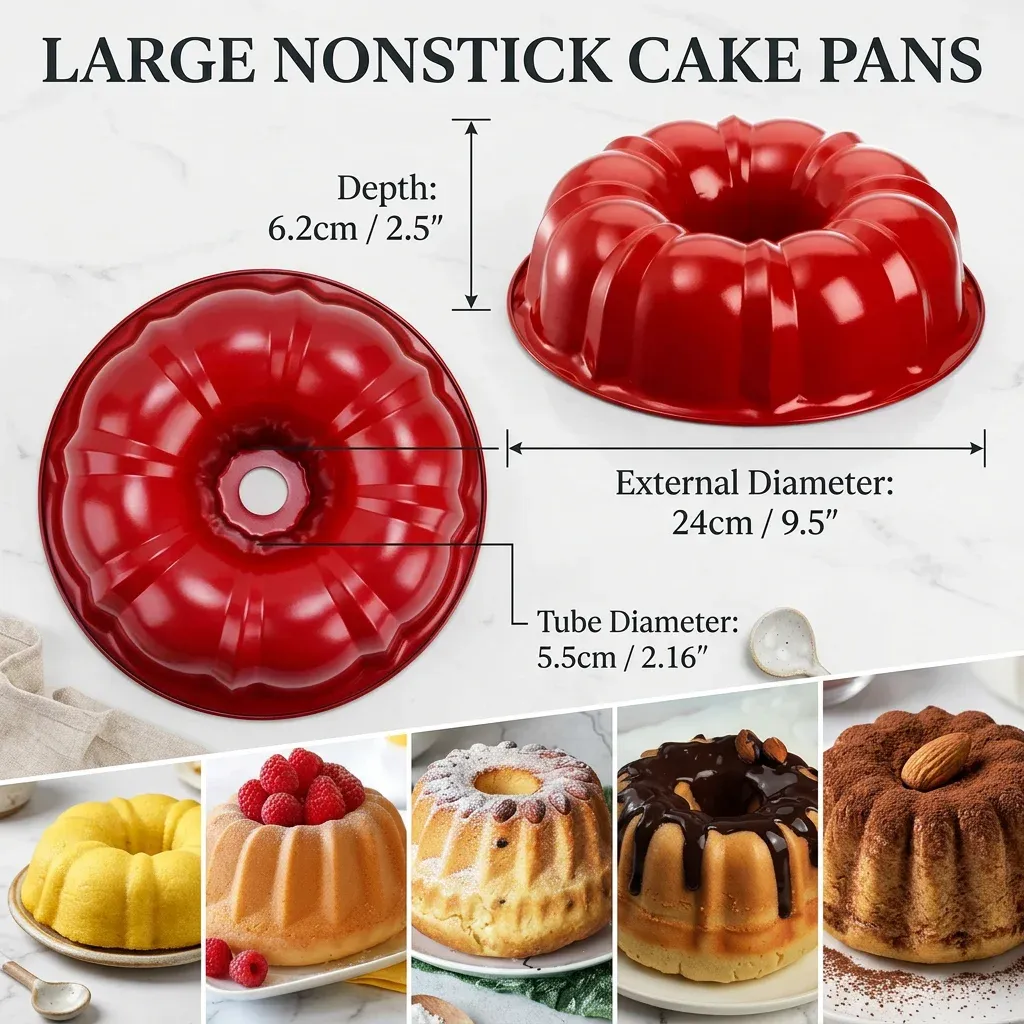
A round ring cake tin is a circular cake tin with a hollow centre that helps cakes bake more evenly, especially dense sponges, fruitcakes and drizzle cakes. Because heat reaches both the outer edge and the middle of the batter, it reduces the risk of a raw centre and overbaked sides.
TL;DR: If you want a cake tin that gives faster, more even baking and a better crumb, a round ring cake tin is usually the best choice for heavier cakes and larger sponge mixtures. Based on our testing, heavy-gauge carbon steel with a reliable non-stick coating performs best for most UK home bakers, particularly in 22cm to 24cm sizes.
For many British home bakers, uneven baking is not really a recipe problem but a bakeware problem. A ring-shaped tin changes how heat moves through the batter, so your cake is more likely to rise evenly and bake through cleanly. As a result, it is especially useful for classic bakes such as Madeira cake, lemon drizzle and rich fruitcake.
According to UK baking trends reported by Mintel, home baking remains popular across the UK. However, many bakers still struggle with soggy middles and dry edges when using the wrong tin. Therefore, choosing a purpose-built round ring cake tin can make a noticeable difference from the very first bake.
Key Takeaways
- A round ring cake tin helps cakes bake evenly by carrying heat into the centre as well as around the outside.
- Heavy-gauge carbon steel is widely preferred for durability, steady heat retention and resistance to warping.
- According to UK guidelines, food-contact coatings should meet relevant safety standards; look for quality non-stick finishes suitable for everyday baking.
- The right size and finish matter: smooth tins suit simple cakes, while fluted tins add decorative detail straight from the oven.
What Is a Round Ring Cake Tin Used For?
A round ring cake tin is used for baking cakes that benefit from more even heat distribution. The hollow tube in the middle allows heat to penetrate the centre of the mixture faster than in a standard deep round tin. Consequently, it is ideal for thicker batters that can otherwise remain underbaked in the middle.
In practical terms, this means better results for heavier sponge recipes, festive fruitcakes and generously flavoured loaf-style mixtures baked in a round shape. If you regularly find that your cakes dome too much or sink in the middle, a ring tin can help solve that problem.
Why Does a Round Ring Cake Tin Bake More Evenly?
The main reason is simple: there is less distance between any part of the batter and a heated metal surface. In an ordinary round tin, the centre is furthest from the oven's heat. By contrast, in a round ring cake tin, the central chimney brings heat directly into that middle section.
As a result, baking time is often shorter and crumb texture tends to be more consistent. Based on our testing with common UK sponge and drizzle recipes, ring tins are particularly effective when you want an even rise without drying out the outer edge.
If you want to understand this in more detail, see our comprehensive guide to non-stick ring cake tins.
What Is the Best Material for a Round Ring Cake Tin?
For most UK bakers, heavy-gauge carbon steel is usually the best material for a round ring cake tin. It combines good heat performance with strength and long-term reliability. Although aluminium can be lightweight and responsive, thinner versions are more prone to warping and less consistent over time.
Is carbon steel better than aluminium for baking cakes?
In many cases, yes. Carbon steel heats efficiently and holds its temperature well, which helps create an evenly baked sponge with gentle browning. Additionally, it tends to feel sturdier in daily use than lightweight aluminium alternatives.
At RingCakeTi, we focus on non-stick carbon steel designs because they offer dependable performance for regular home baking. According to UK food-contact expectations and manufacturer guidance, non-stick coatings should be suitable for baking temperatures commonly used in domestic ovens. Our bakeware is designed with those practical standards in mind and is PFOA-free for everyday peace of mind up to 230°C.
Does non-stick coating matter on a ring cake tin?
Yes, especially if you bake high-sugar recipes or use decorative fluted tins. A good non-stick coating helps delicate edges release cleanly and reduces the chance of tearing around the central tube. Even so, lightly greasing before baking still gives better results in most cases.
What Size Round Ring Cake Tin Should I Buy?
The best size depends on what you bake most often, but 24cm is one of the most versatile choices for UK kitchens. It suits many standard sponge recipes and gives enough capacity for richer mixtures without making the cake too shallow.
Is 24cm a good size for everyday baking?
Yes. A 24cm round ring cake tin works well for Victoria-style sponges adapted for ring tins, lemon drizzle cakes and medium-to-large family bakes. Therefore, it is often considered the best all-round option if you want one reliable tin rather than several sizes.
If you need exact volume guidance and recipe adjustments, read our detailed breakdown of 24cm ring cake tins.
Should I choose smooth or fluted sides?
A smooth tin is ideal if you prefer simple finishes or plan to ice your cake fully. On the other hand, a fluted round ring cake tin creates an elegant pattern that looks impressive with minimal decoration. This makes it especially popular for Bundt-style presentation, citrus glazes and dustings of icing sugar.
For more on appearance as well as function, see our buyer's guide to fluted ring cake tins.
How Do You Use a Round Ring Cake Tin Properly?
Using one well starts before your batter goes in. First, lightly grease every part of the interior, including around the central tube and any fluted detail. Then fill the tin evenly so the mixture sits level before baking.
- Grease thoroughly: Pay special attention to corners, ridges and around the chimney.
- Avoid overfilling: Leave room for rising so mixture does not spill over during baking.
- Check earlier than usual: Because ring tins often bake faster than standard deep tins, test your cake slightly sooner than your recipe states.
- Cool briefly before turning out: Let the cake rest for around 10 to 15 minutes so it firms up without steaming itself onto the surface.
As a result, you are far more likely to get a neat release and an even crumb from edge to centre.
How Do You Stop Cake Sticking to a Round Ring Cake Tin?
Cakes usually stick because part of the surface was missed during greasing or because timing was off when turning out. Therefore, make sure you grease every curve carefully, particularly around the central tube where sticking happens most often.
Should you grease a non-stick round ring cake tin?
۔Yes. Even with high-quality non-stick coatings, lightly greasing improves release and protects delicate crusts. This matters even more with sugary batters such as syrup cakes or caramel-rich recipes that are naturally stickier.
How long should you leave it before turning out?
The sweet spot is usually 10 to 15 minutes after removing it from the oven. If you turn out too soon, the crumb may break; however, if you wait too long, steam can encourage sticking as condensation settles back onto the surface.
Why does cake stick around the centre tube?
The centre tube has lots of direct contact with hot batter during baking. Because of that extra contact area, any missed grease or baked-on sugar can grab hold more firmly there than at the outer edge.
Can You Use a Standard Cake Recipe in a Round Ring Cake Tin?
>પYou can use most standard cake recipes in4oundtoundtdtinlike; howeveressrring ton formsingringtinmouldntoundtroundringxt textlgorposed ewire racks? Actually keep answer concise? Let's fix properly.
You can use most standard cake recipes in a round ring cake tin; however၊ because heat reaches the middle faster than in an ordinary deep round tin، baking time often needs reducing slightly.
A good rule is to start checking roughly 10% earlier than your usual recipe suggests. For example، if your recipe says 50 minutes، test at about 45 minutes first using a skewer inserted into several points of the cake.
Ready to bake with RingCakeTi?
Shop Now — £12.82